How to light a healthcare facility
Two opposite users coexist here: the professional who needs clinical precision and the patient lying down looking at the ceiling. Light must serve both.
- Maintained illuminance
- 300 lx (reconocimiento 1000)
- Glare (UGR)
- ≤ 19 (sala: ≤ 22)
- Colour rendering
- > 90 (diagnóstico > 96)
- Colour temperature
- 3000–4000 K
- Uniformity
- ≥ 0,60
Levels vary widely by task: 100 lux for general room lighting, 300 lux for simple examination, 500 lux in consulting rooms and 1,000 lux for examination and treatment. Operating theatres are a separate case with dedicated equipment.
Colour fidelity is not aesthetic, it is diagnostic: CRI >90 is the minimum, and in dermatology or laboratory work >96 with a high R9 is recommended, because the colour of skin, blood or a mucous membrane is clinical information. Poor CRI can mask cyanosis or jaundice.
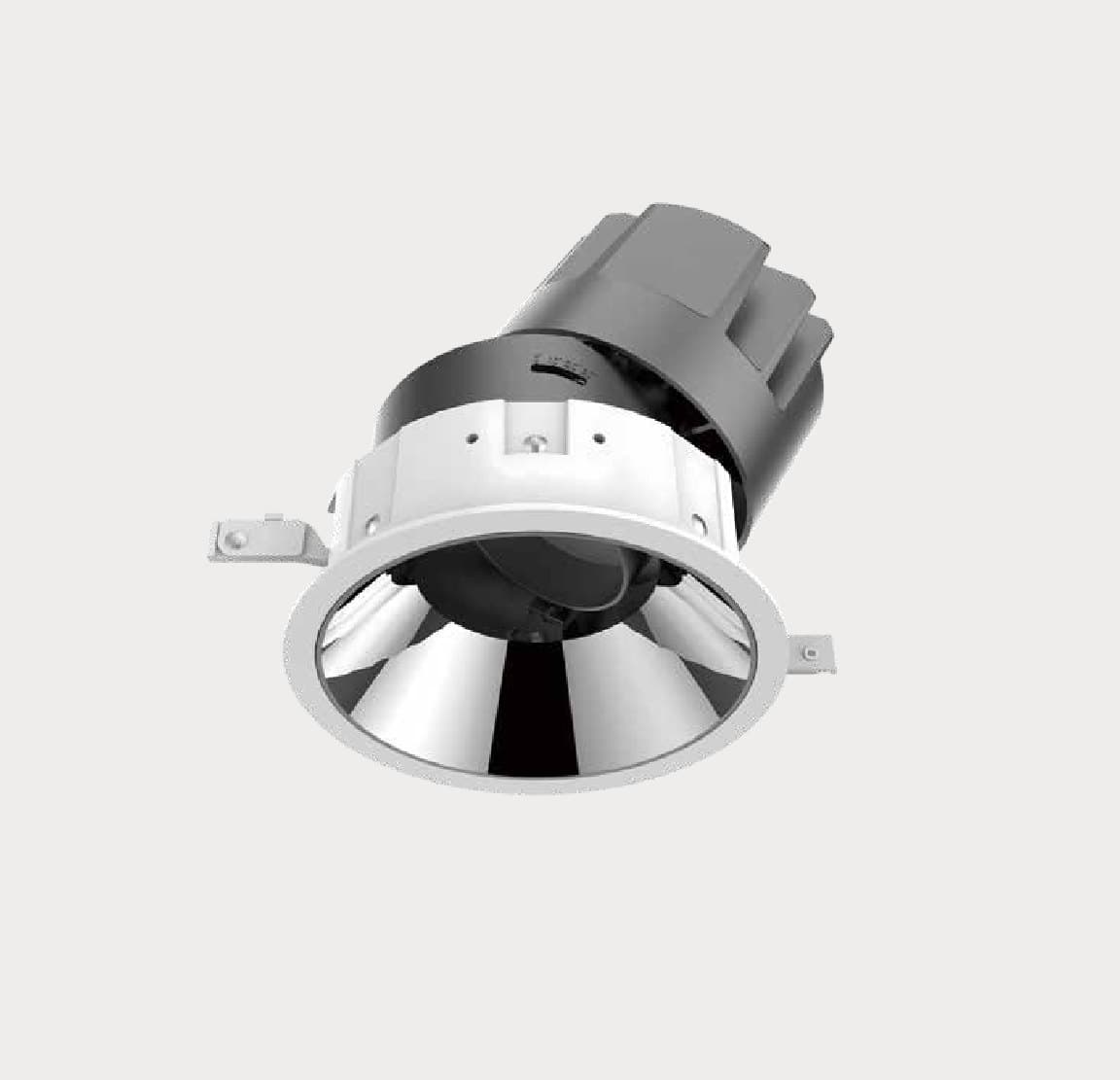
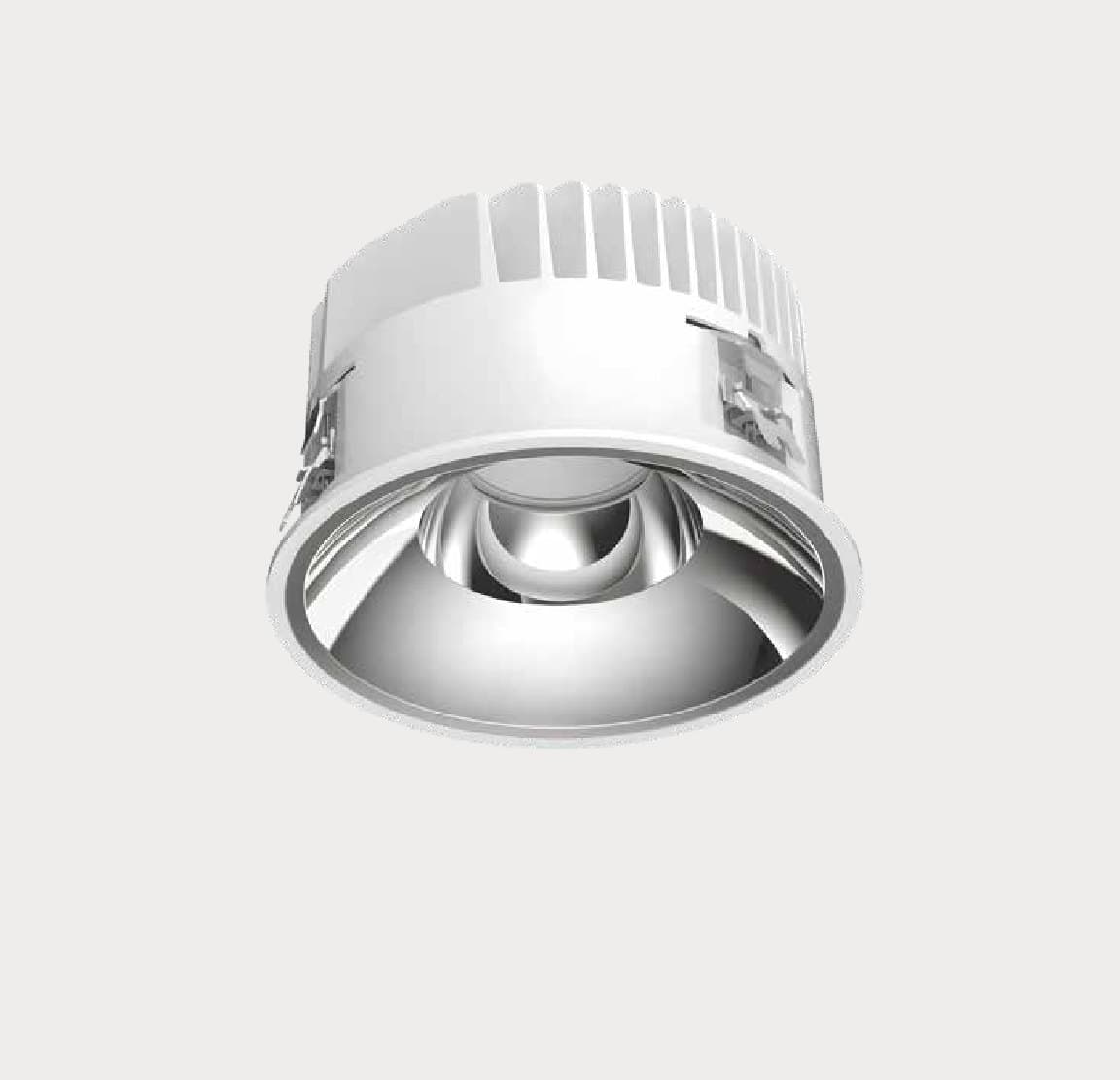
A bedridden patient looks at the ceiling for hours: no luminaire should sit in their direct field of view. This is solved with indirect light, heavily shielded optics or bedhead wall luminaires — never centred over the bed.
Surfaces must allow frequent cleaning and disinfection. Critical areas require an adequate IP rating and materials resistant to aggressive products.
- In rooms: soft general light + individual reading light + high-level examination light, all independent.
- Use 4000 K in clinical work areas and 3000 K in rooms and waiting areas to reduce anxiety.
- Provide low-intensity night lighting for rounds without waking the patient.
- Check UGR from the lying patient’s position, not only from the standing professional’s.