How to light a retail store
In retail, light does not inform: it sells. The goal here is not uniformity but the contrast that guides the eye to the product.
- Maintained illuminance
- 300–750 lx
- Glare (UGR)
- ≤ 22
- Colour rendering
- > 90 (moda: > 96)
- Colour temperature
- 3000 K
- Uniformity
- contraste 3:1–5:1
The ambient base sits between 300 and 500 lux, but what builds the customer’s mental shop window is accent: a 3:1 contrast ratio on the featured product, and up to 5:1 on high-value pieces.
Colour fidelity is a direct sales argument. CRI >90 already separates tones well; in fashion, food and jewellery, CRI >96 with a high R9 makes reds, skin and metals look as they do outdoors, not dull.
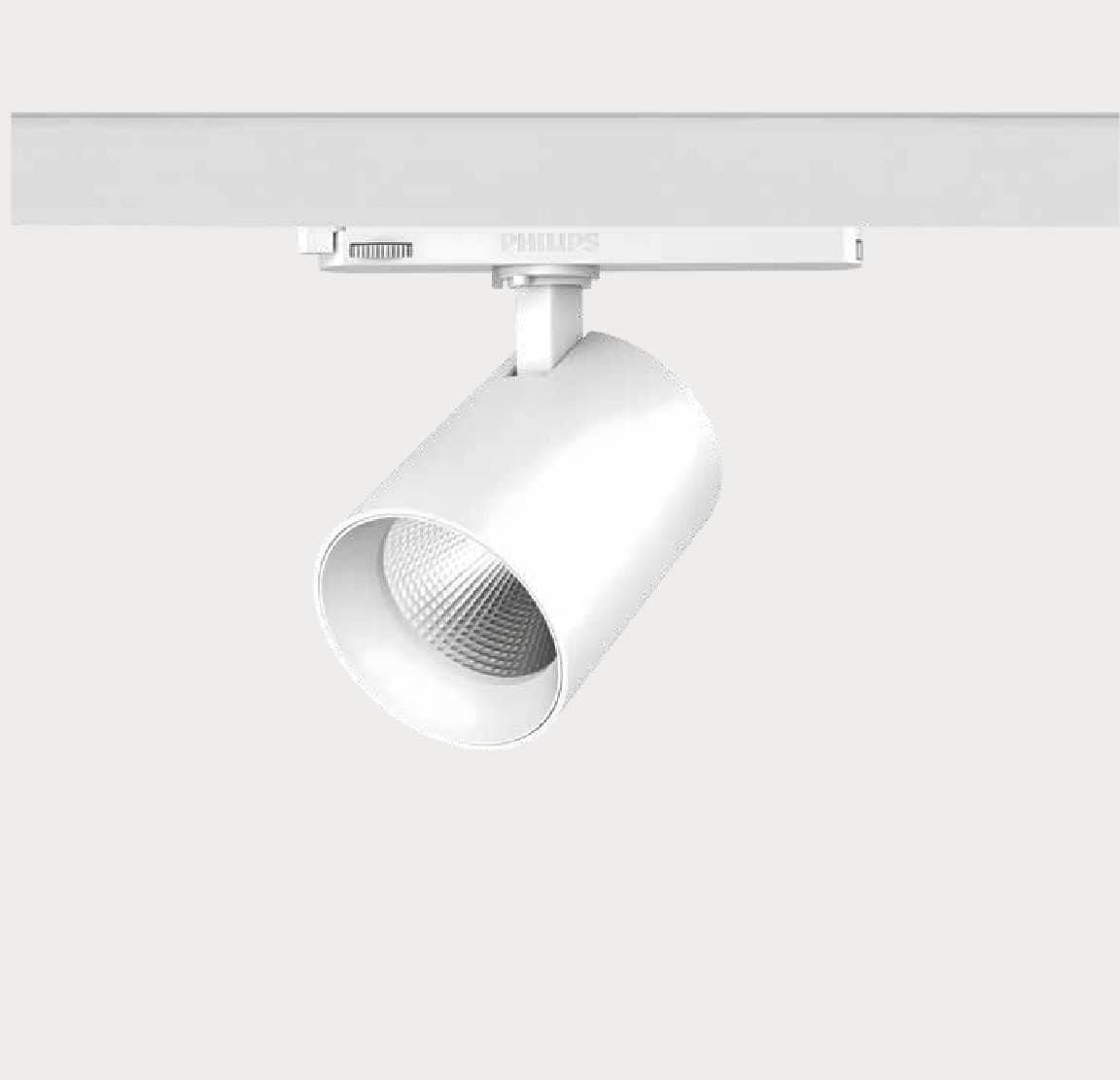
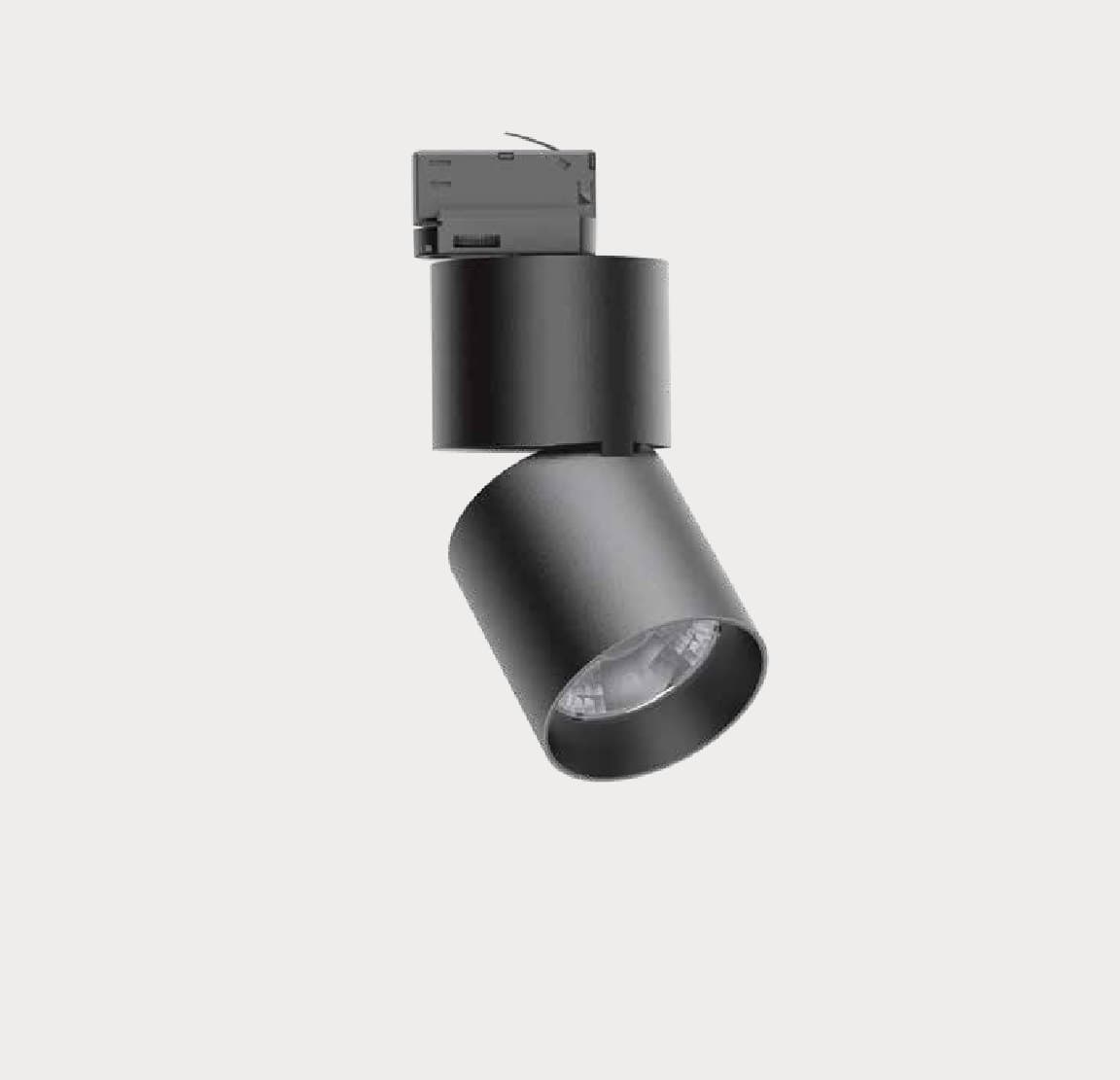
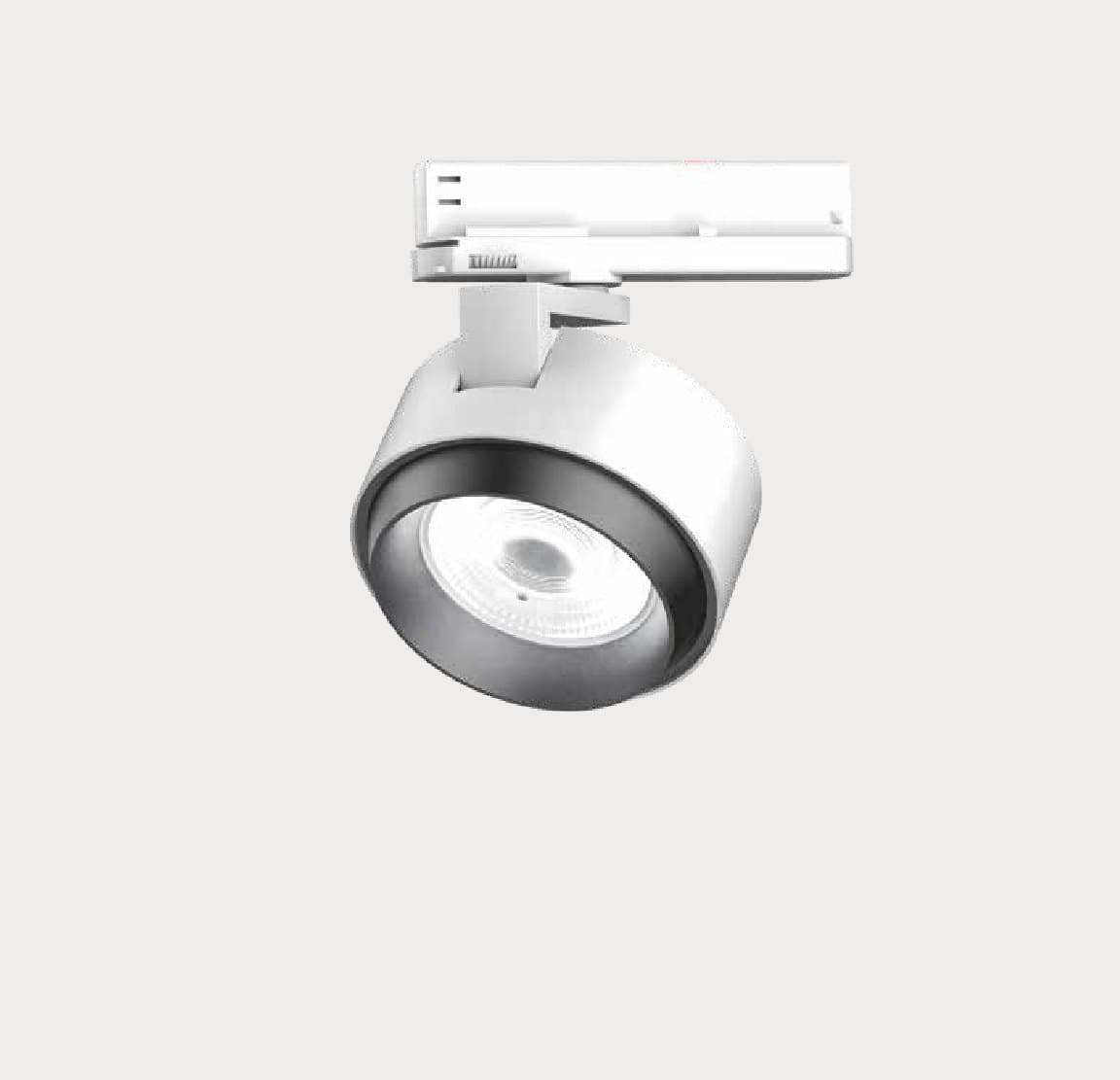
Optics rule: a narrow beam (20–25°) cuts merchandise out from the background, while a medium beam (36–45°) washes complete shelving. Combining both on the same track is what gives the space depth.
Three-circuit or magnetic track lets you relocate spotlights with every collection change without building work — decisive in seasonal retail.
- Light the product, not the floor: aim at 30° from vertical to avoid harsh shadows and reflections.
- Reserve 3000 K for textiles and wood; 4000 K works better for electronics and fresh food.
- Raise the shop-window level by 50 % over the sales floor to compete with daylight from the street.
- Programme scenes (opening, peak hours, cleaning, night) with MasterConnect or Casambi.